

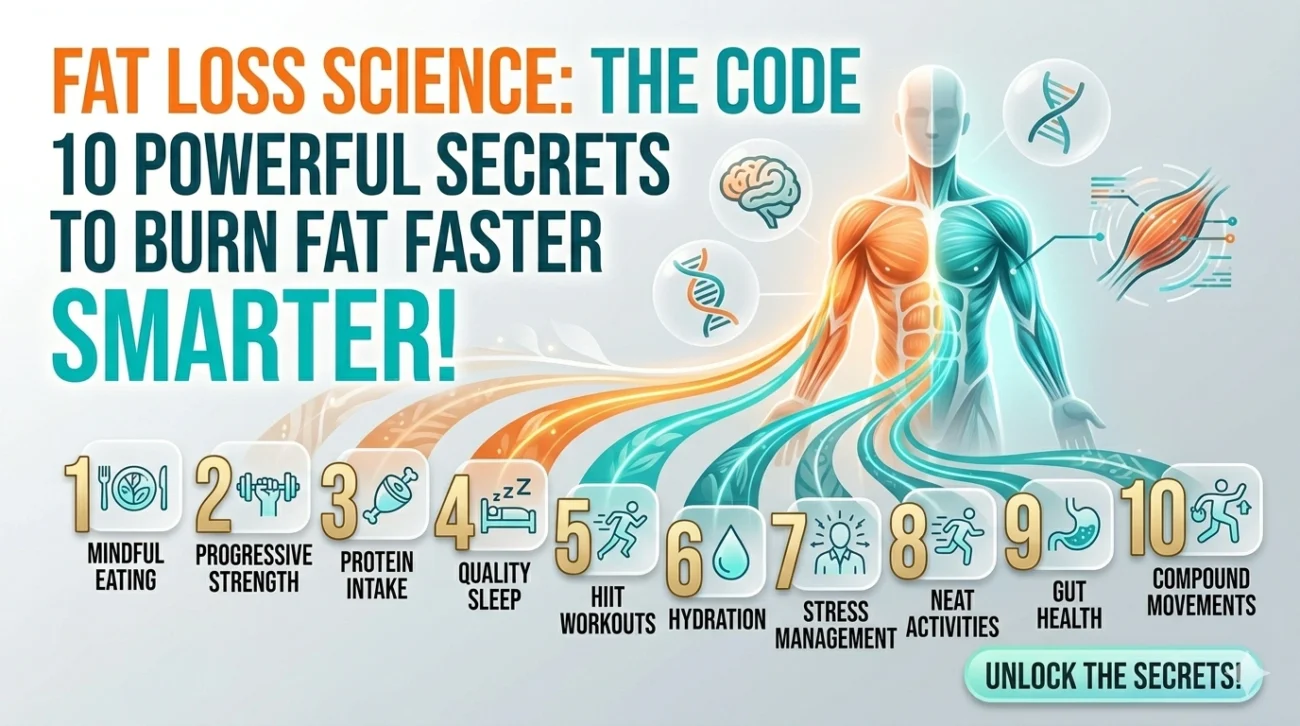
Fat loss science is the key to understanding how to burn fat faster and smarter without falling for myths or shortcuts. Most people fail because they don’t understand how calorie deficit, metabolism, and consistency actually work together. In this guide, you’ll learn proven strategies backed by fat loss science to achieve sustainable results.
Why Fat Loss Science Matters for Beginners and Professionals
Fat loss is one of the most searched topics globally, yet most people struggle to see results. The biggest reason? Misinformation and unrealistic expectations.
People jump between diets, try extreme workouts, or follow trends without understanding the basic science of fat loss. The truth is simple: fat loss is not about magic diets or shortcuts — it’s about consistency, energy balance, and smart habits.
Once you understand the science, burning fat becomes predictable and sustainable.
Fat Loss Science Explained: Calorie Deficit Basics
At the heart of fat loss lies one powerful concept:
Calorie Deficit = Consuming fewer calories than your body burns
Your body needs energy to function — breathing, walking, thinking, digesting. When you eat fewer calories than required, your body starts using stored fat as energy.
Example:
- Daily calorie burn: 2,000 kcal
- Daily intake: 1,600 kcal
- Result: 400 kcal deficit → fat loss
Without a calorie deficit, fat loss is impossible, no matter what diet or workout you follow.
How Metabolism Works in Fat Loss Science
Your metabolism determines how many calories your body burns daily. It includes:
- Basal Metabolic Rate (BMR): Calories burned at rest
- Physical Activity: Exercise + daily movement
- Thermic Effect of Food: Calories burned during digestion
Key Insight:
You don’t need a “fast metabolism” — you need to manage your calorie intake and activity levels effectively.
Best Fat Loss Science Strategies That Actually Work
1. Create a Sustainable Calorie Deficit
Avoid extreme dieting. Instead:
- Reduce 300–500 calories daily
- Focus on long-term consistency
- Avoid crash diets (they slow metabolism and cause rebound weight gain)
According to fat loss science, consistency matters more than intensity.
2. Prioritize Protein Intake for Faster Fat Burning
Protein is crucial for fat loss because it:
- Keeps you full longer
- Preserves muscle mass
- Boosts metabolism slightly
Ideal intake: 1.2–2g protein per kg body weight
3. Combine Strength Training with Cardio
Many people rely only on cardio, but that’s a mistake.
- Strength training builds muscle → increases metabolism
- Cardio burns calories → supports deficit
The best fat loss plan includes both.
4. Increase Daily Movement (NEAT)
NEAT = Non-Exercise Activity Thermogenesis
This includes:
- Walking
- Taking stairs
- Standing more
Small movements can burn hundreds of extra calories daily without formal workouts.
Fat Loss Methods Comparison Table (What Actually Works Best)
| Method | Effectiveness | Sustainability | Fat Loss Speed | Best For |
|---|---|---|---|---|
| Crash Diet | Low | Very Low | Fast (temporary) | Not recommended |
| Calorie Deficit Diet | High | High | Steady | Everyone |
| Strength Training | Very High | High | Moderate | Long-term fat loss |
| Cardio Only | Medium | Medium | Moderate | Beginners |
| High Protein Diet | High | High | Steady | Muscle + fat loss |
| Intermittent Fasting | Medium | Medium | Varies | Lifestyle-based |
The Role of Diet in Burning Fat Faster
Your diet controls 80% of fat loss results.
Focus on:
- Whole foods (vegetables, fruits, lean protein)
- Healthy fats (nuts, olive oil)
- Complex carbs (rice, oats, whole grains)
Avoid:
- Processed foods
- Sugary drinks
- Excess junk food
Golden Rule: Eat clean most of the time, not perfectly all the time.
Why Sleep and Stress Directly Impact Fat Loss
Fat loss isn’t just about diet and exercise.
Lack of Sleep:
- Increases hunger hormones
- Reduces fat-burning efficiency
High Stress:
- Raises cortisol levels
- Promotes fat storage (especially belly fat)
Solution:
- Sleep 7–8 hours daily
- Manage stress through exercise, meditation, or hobbies
Common Fat Loss Mistakes That Slow Your Progress
1. Expecting Quick Results
Fat loss takes time. Healthy rate:
0.5–1 kg per week
2. Skipping Meals
Skipping meals often leads to overeating later and slows metabolism.
3. Overdoing Cardio
Too much cardio can lead to muscle loss and fatigue. Balance is key.
4. Not Tracking Calories
Most people underestimate how much they eat. Awareness is crucial.
Advanced Fat Loss Tips to Burn Fat Like a Pro
- Drink more water → improves metabolism and reduces hunger
- Use progressive overload in workouts
- Track progress weekly (not daily)
- Stay consistent for at least 12–16 weeks
- Focus on fat loss, not just weight loss
How to Build a Simple Fat Loss Plan (Step-by-Step)
- Calculate your daily calorie needs
- Create a 300–500 calorie deficit
- Eat high-protein meals
- Train 4–5 times per week
- Walk 8,000–10,000 steps daily
- Sleep properly
- Track progress weekly
Conclusion: Fat Loss is Simple, But Not Easy
The science of fat loss is simple — calorie deficit, proper nutrition, and consistent effort. But execution is where most people fail.
There are no shortcuts. No magic diets. No secret hacks.
If you stay consistent, follow the basics, and avoid common mistakes, you will not only lose fat but also build a healthier and stronger body.
FAQs on Fat Loss and Burning Fat Faster
Q1. What is the fastest way to burn fat?
The fastest and safest way is to create a calorie deficit through diet and exercise while maintaining protein intake and consistency.
Q2. Can I lose fat without exercise?
Yes, through a calorie deficit. However, exercise helps speed up fat loss and improves overall health.
Q3. How much fat can I lose in a month?
A healthy fat loss rate is 2–4 kg per month, depending on your starting point.
Q4. Is intermittent fasting better than dieting?
It’s just a method to control calories. Fat loss depends on total calorie intake, not timing.
Q5. Why am I not losing fat despite working out?
Most likely due to no calorie deficit, poor diet, lack of sleep, or inconsistency.
About The Author

