

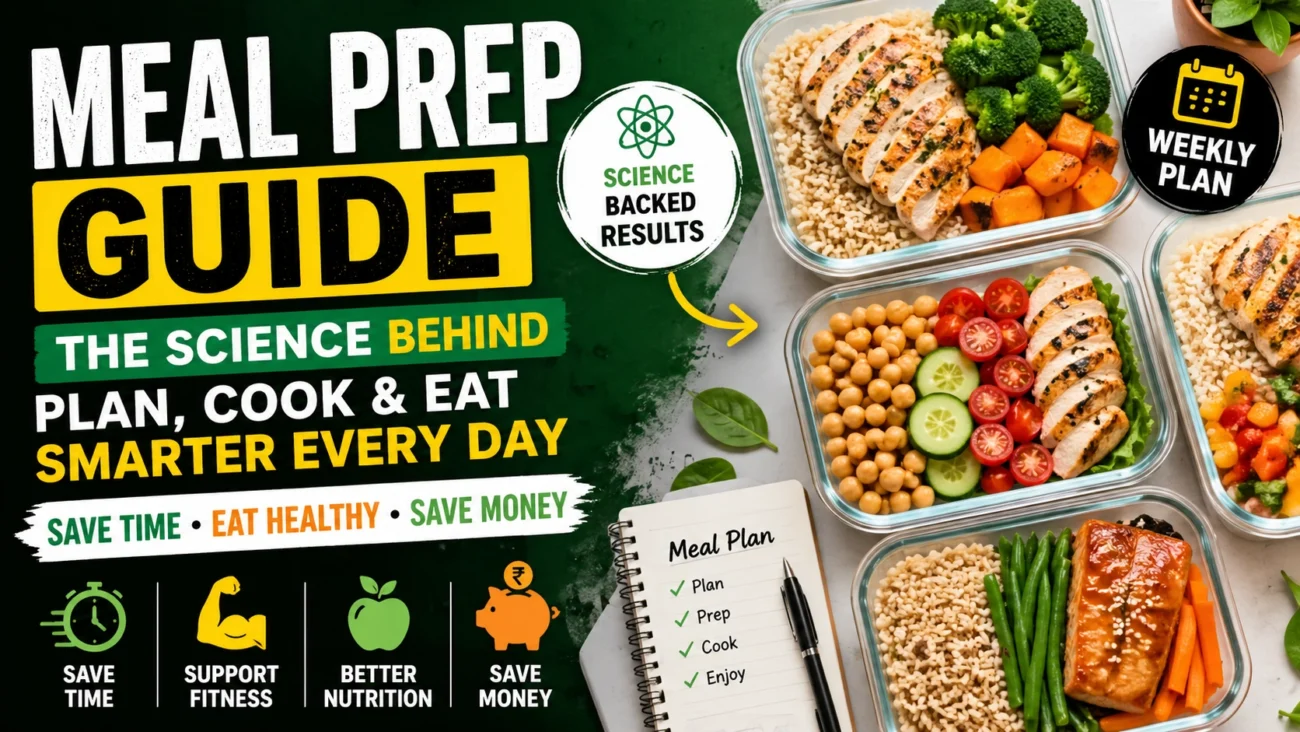
Meal prep guide strategies help you plan, cook, and eat smarter every day without stress. By using science-backed techniques, meal prep reduces decision fatigue, improves nutrition, and saves time in your daily routine.
What is Meal Prep? A Complete Meal Prep Guide for Beginners
Meal prep, short for meal preparation, is the process of planning, cooking, and storing meals in advance. It has gained massive popularity globally due to its ability to save time, reduce stress, improve nutrition, and support consistent eating habits.
In a world where people are constantly busy, meal prep offers a structured way to avoid unhealthy last-minute food choices. Instead of relying on takeout or processed foods, you can prepare balanced meals ahead of time and stay on track with your health and fitness goals.
The rise of meal prep is not just a trend — it is backed by science. From behavioral psychology to nutrition science, meal prep aligns with how humans make better decisions when they reduce daily friction and planning fatigue.
Science Behind This Meal Prep Guide for Better Eating Habits
Meal prep works because it removes decision-making from the equation. Studies in behavioral science show that decision fatigue leads to poor food choices, especially when people are tired or stressed.
By preparing meals in advance, you:
- Reduce impulsive eating
- Control portion sizes
- Ensure balanced nutrition
- Avoid reliance on high-calorie convenience foods
Additionally, meal prep leverages the principle of habit formation. When meals are pre-planned, eating healthy becomes automatic rather than a daily struggle.
Why Do People Struggle with Healthy Eating Without Meal Prep?
Many people fail to maintain a healthy diet not because they lack knowledge, but because of poor planning. Common challenges include:
- Lack of time during weekdays
- Dependence on fast food or delivery apps
- Inconsistent grocery shopping
- Emotional or stress eating
- Poor portion control
Meal prep addresses all these issues by introducing structure and predictability into your eating routine.
Step-by-Step Meal Prep Guide to Plan and Cook Efficiently
1. Define Your Goal Before You Start
Before you begin meal prepping, identify your objective:
- Weight loss
- Muscle gain
- Time-saving
- Budget-friendly eating
- Health improvement
Your goal determines your calorie intake, macronutrient balance, and portion sizes.
2. Plan Your Meals for the Week
Create a simple weekly plan including:
- Breakfast options
- Lunch meals
- Dinner recipes
- Snacks
Keep it realistic. Avoid overcomplicating your plan with too many recipes. Repeating meals is completely fine and actually makes prep easier.
3. Make a Smart Grocery List
Once your meals are planned, create a grocery list. Focus on:
- Whole foods (vegetables, fruits, grains)
- Protein sources (eggs, chicken, legumes, tofu)
- Healthy fats (nuts, seeds, oils)
- Staples (rice, pasta, spices)
Buying only what you need reduces food waste and saves money.
4. Batch Cooking: The Core of Meal Prep
Batch cooking means preparing large quantities of food at once. This can include:
- Cooking grains in bulk (rice, quinoa)
- Preparing proteins (grilled chicken, lentils)
- Chopping vegetables in advance
Batch cooking is efficient because it reduces cooking time throughout the week.
5. Portioning and Storage Techniques
Divide your meals into containers based on portion size. Use airtight containers to maintain freshness.
Key tips:
- Store meals in the fridge for 3–4 days
- Freeze meals for longer storage
- Label containers with dates
Proper storage ensures food safety and prevents spoilage.
Best Foods to Include in Your Meal Prep Guide
Choosing the right foods is crucial for successful meal prep. The best foods are those that:
- Stay fresh for several days
- Reheat well
- Maintain texture and taste
Examples include:
Proteins: Chicken, eggs, tofu, beans, lentils
Carbohydrates: Rice, oats, quinoa, sweet potatoes
Vegetables: Broccoli, carrots, bell peppers, spinach
Fats: Nuts, seeds, olive oil
Avoid foods that become soggy or lose texture quickly.
How This Meal Prep Guide Helps Save Time and Money
A well-prepped meal should include:
- Protein for muscle repair and satiety
- Carbohydrates for energy
- Healthy fats for hormone balance
- Fiber for digestion
A simple formula:
Half plate vegetables + One-quarter protein + One-quarter carbs + Healthy fats
This ensures your meals are nutritionally complete and satisfying.
Common Meal Prep Mistakes to Avoid
Even though meal prep is simple, many people make mistakes that reduce its effectiveness:
- Preparing too many dishes at once
- Not storing food properly
- Ignoring variety (leading to boredom)
- Skipping seasoning and flavor
- Overestimating how long food stays fresh
Avoiding these mistakes will make your meal prep sustainable in the long run.
How Meal Prep Saves Time and Money
Meal prep significantly reduces both cooking time and food expenses.
Time-saving benefits:
- Fewer daily cooking sessions
- Reduced decision-making
- Less time spent on grocery runs
Money-saving benefits:
- Bulk buying reduces cost
- Less food waste
- Avoiding expensive takeout meals
Over time, these small savings add up significantly.
Meal Prep Guide for Weight Loss and Fitness Goals
Yes, meal prep is one of the most effective tools for weight management.
It helps by:
- Controlling calorie intake
- Preventing overeating
- Maintaining consistent nutrition
- Supporting workout routines
For fitness enthusiasts, meal prep ensures adequate protein intake and energy levels, which are essential for performance and recovery.
How to Keep Meal Prep Guide Interesting and Sustainable?
One of the biggest challenges with meal prep is boredom. To avoid this:
- Rotate recipes weekly
- Use different spices and sauces
- Experiment with cuisines
- Mix and match ingredients
Variety keeps you engaged and makes meal prep enjoyable rather than repetitive.
Weekly Meal Prep Guide Routine for Beginners
Here’s a simple routine to follow:
Day 1 (Planning): Decide meals and create a grocery list
Day 2 (Shopping): Buy all ingredients
Day 3 (Cooking): Batch cook meals
Day 4–7 (Eating): Reheat and consume
This structured approach ensures consistency and reduces last-minute stress.
The Psychology Behind Successful Meal Prep Guide
Meal prep is not just about cooking — it’s about behavior change.
Key psychological benefits include:
- Reduced stress from daily decisions
- Increased discipline and consistency
- Improved relationship with food
- Greater control over health
When you remove uncertainty, you make healthier choices naturally.
How to Transition from Random Eating to Structured Meal Prep Guide?
Switching to meal prep can feel overwhelming initially. Start small:
- Prep meals for 2–3 days instead of a full week
- Begin with one meal (like lunch)
- Gradually expand to all meals
Consistency matters more than perfection.
Conclusion: Make Meal Prep Guide a Lifestyle, Not a Task
Meal prep is not about restriction — it’s about freedom and control. It frees you from daily stress, poor food choices, and unhealthy habits.
By investing a few hours each week, you gain:
- Better health
- More time
- Financial savings
- Mental clarity
The science is clear — planning ahead leads to better decisions. Start small, stay consistent, and turn meal prep into a sustainable lifestyle habit.
FAQs on Meal Prep Guide
Q1. How many days can meal-prepped food last in the fridge?
Most meal-prepped food stays fresh for 3–4 days when stored properly in airtight containers.
Q2. Is meal prep safe for health?
Yes, as long as food is stored correctly and reheated properly, meal prep is completely safe and healthy.
Q3. Can I meal prep for weight loss?
Absolutely. Meal prep helps control calories and ensures balanced nutrition, making it ideal for weight loss.
Q4. What containers are best for meal prep?
Airtight glass or BPA-free plastic containers are best for maintaining freshness and safety.
Q5. How do I avoid getting bored with meal prep?
Rotate recipes, use different spices, and try new cuisines to keep meals interesting.
About The Author

