

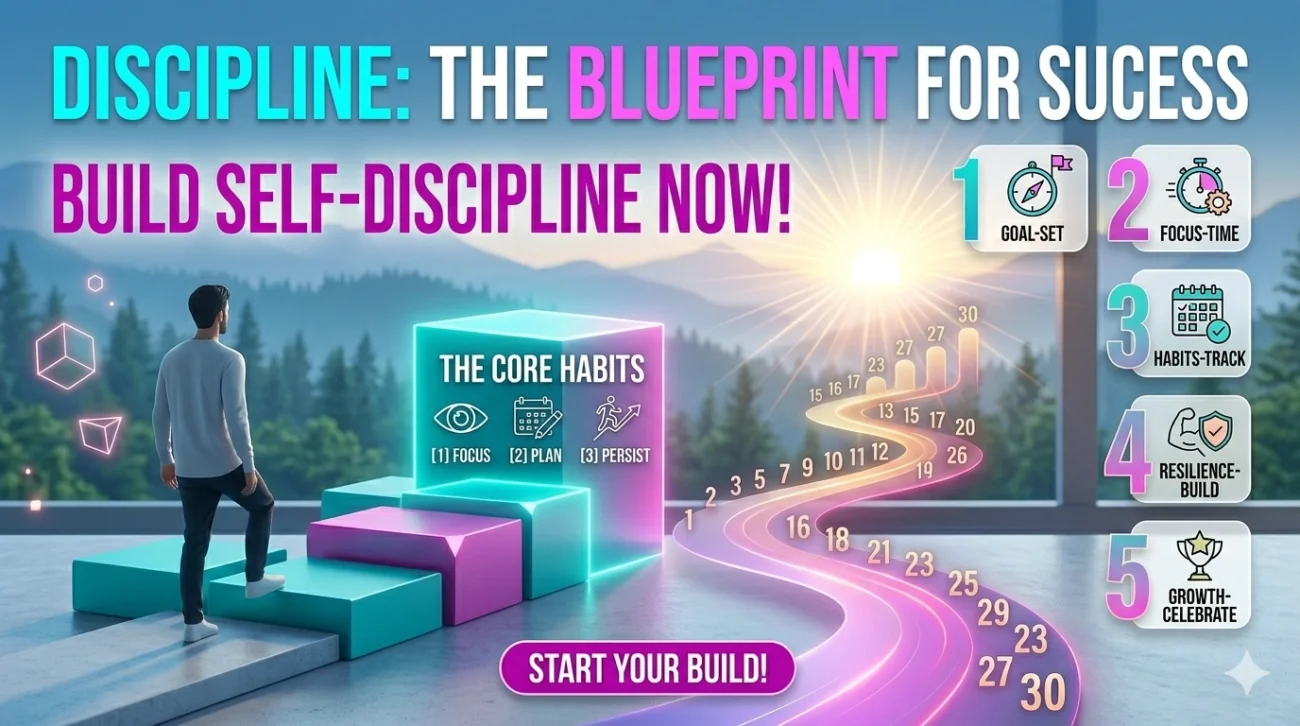
How to build discipline is the foundation of long-term success, consistency, and mental strength. Most people rely on motivation, but real growth comes from disciplined habits and daily actions.
Why Learning How to Build Discipline Is the Real Secret to Success
Most people believe motivation is the key to success. But motivation is temporary — it comes and goes. Discipline, on the other hand, is what keeps you going when motivation disappears.
If you look at highly successful individuals across industries, one trait stands out: consistent discipline. Whether it’s fitness, business, or personal growth, discipline is what separates winners from everyone else.
The problem is — most people don’t know how to build discipline in a sustainable way.
This guide will walk you through 6 powerful, practical strategies to develop discipline, stay consistent, and transform your life.
What Is Discipline and Why Most People Fail to Build It
Discipline is the ability to take action regardless of how you feel. It’s doing what needs to be done even when you don’t feel like doing it.
Most people fail because they:
- Rely on motivation instead of systems
- Set unrealistic goals
- Try to change everything overnight
- Quit after short-term discomfort
To build discipline, you need a system, not willpower.
The Science Behind How to Build Discipline Through Habits
Your life is a reflection of your daily habits. Discipline is not built in one big decision — it’s built through small repeated actions.
When you repeat an action consistently:
- Your brain creates neural pathways
- The task becomes easier over time
- Resistance decreases
That’s why disciplined people don’t rely on effort — they rely on automated habits.
6 Proven Strategies on How to Build Discipline and Stay Consistent
1. Start Small to Build Discipline
One of the biggest mistakes people make is starting too big.
Instead of saying:
“I’ll work out 1 hour daily”
Start with:
“I’ll work out for 10 minutes daily”
Small wins create momentum.
Why this works:
- Reduces resistance
- Builds confidence
- Creates consistency
2. Identity Shift for Strong Discipline
If your goal is to “lose weight,” you might stay inconsistent.
But if your identity becomes:
“I am a disciplined and healthy person,”
Your actions automatically align.
Shift from:
- “I want results”
👉 to - “I am the type of person who takes action daily”
3. Systems That Help You Build Discipline
Discipline becomes easier when decisions are removed.
Examples:
- Fixed workout time daily
- Same morning routine
- Pre-planned meals
When your routine is fixed, you don’t waste energy deciding — you just act.
4. Environment Control for Better Discipline
Environment plays a huge role in discipline.
If distractions are around you, discipline becomes harder.
Examples:
- Keep your phone away while working
- Remove junk food from your house
- Block distracting apps
Key insight:
It’s easier to control your environment than your mind.
5. Reward System to Build Discipline
Your brain follows rewards. If discipline feels painful, you won’t stick to it.
Pair discipline with rewards:
- Listen to music while working out
- Reward yourself after completing tasks
- Track progress visually
This creates a positive feedback loop.
6. Consistency Over Perfection
Perfection kills discipline.
Missing one day is okay — quitting is not.
The rule is simple:
Never miss twice.
Consistency over time always beats intensity.
Discipline vs Motivation: What Really Works?
| Factor | Discipline | Motivation |
|---|---|---|
| Nature | Long-term | Short-term |
| Reliability | Consistent | Unpredictable |
| Dependency | System-based | Emotion-based |
| Result | Sustainable success | Temporary action |
| Best Use | Daily habits & routines | Initial push |
Daily Routine to Build Discipline Faster
If you want faster results, follow a simple structure:
- Morning: Start with one disciplined habit (exercise, reading)
- Work Block: Focus deeply without distractions
- Evening: Review your day and track progress
- Night: Plan next day in advance
This creates a cycle of consistency.
Common Mistakes That Destroy Discipline
Avoid these if you want long-term success:
- Waiting to “feel motivated”
- Taking on too many habits at once
- Ignoring environment setup
- Not tracking progress
- Quitting after small failures
How Long Does It Take to Build Discipline?
There’s no fixed timeline, but studies suggest:
- 21 days → Build awareness
- 66 days → Form strong habits
- 90+ days → Lifestyle change
The key is consistency over time, not speed.
Benefits of Learning How to Build Discipline
When you build discipline, everything improves:
- Better productivity
- Strong mental clarity
- Financial growth
- Improved health
- Higher confidence
Discipline compounds just like money — small efforts lead to massive results over time.
Conclusion: How to Build Discipline for Life
Discipline is not something you’re born with — it’s something you build.
By starting small, creating systems, controlling your environment, and staying consistent, you can develop unbreakable discipline.
Remember:
You don’t rise to your goals, you fall to your systems.
Start today, stay consistent, and your future self will thank you.
FAQs on Building Discipline
Q1. How can I build discipline if I feel lazy?
Start with small habits and remove distractions. Discipline builds through action, not motivation.
Q2. Is discipline better than motivation?
Yes. Motivation is temporary, while discipline creates long-term results.
Q3. What is the easiest way to stay consistent?
Create a routine and reduce decisions. Consistency comes from systems.
Q4. How do I stay disciplined daily?
Follow a fixed schedule, track progress, and focus on small daily actions.
Q5. Can discipline be learned?
Yes. Discipline is a skill that improves with practice and consistency.
About The Author

